
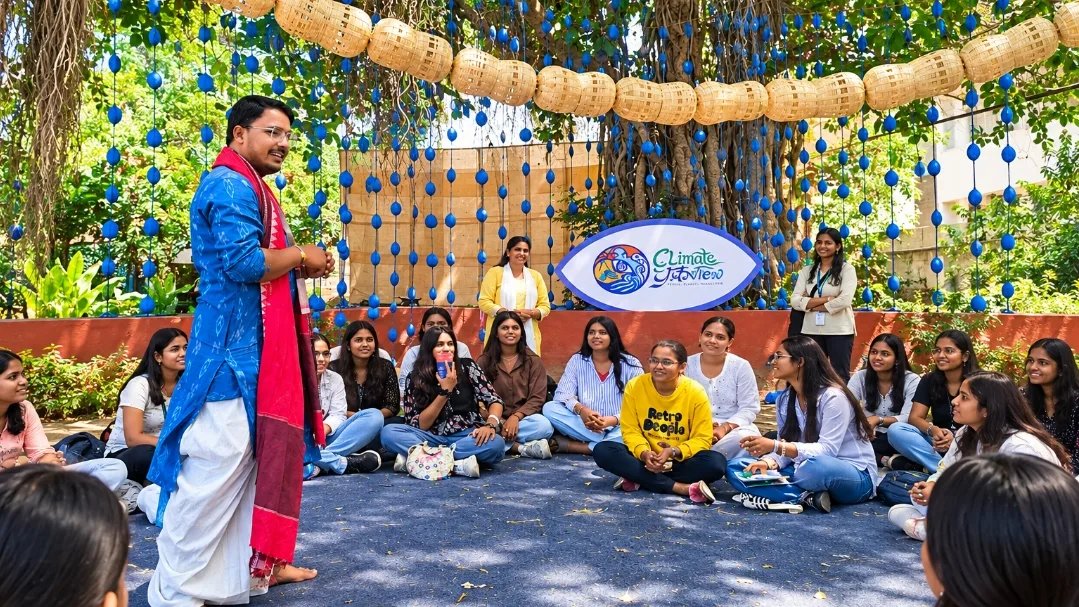
Udaipur: The two-day Climate Chakravyuh Festival 2026, held in Udaipur on September 26 and 27, showcased a unique model of community participation in environmental conservation. More than 2,500 citizens, young people, students and environmental enthusiasts participated in the festival, while over 150 youth activists, social entrepreneurs and artists from across the country conducted more than 70 activities at 13 locations across the city.
Activities were organised at Vidya Bhawan, Lake Pichola, Gulab Bagh, Neemach Mata, Karni Mata, farms, forests and lanes of the old city. Birdwatching, waste segregation, nature walks, night walks, solar lantern making, repairing old electronic equipment and making traditional leaf plates and bowls were among the key activities.
Just 136 Kg of Waste Generated by 2,500 Participants
One of the festival’s key achievements was its environment-friendly approach. Despite the participation of more than 2,500 people over two days, the event generated only 136 kg of waste. Around 90 per cent of the waste was organic and was sent for composting.
Music and Art Carry the Message of Conservation
Both evenings featured music and artistic performances at the Vidya Bhawan amphitheatre. Performances by Kavish Seth, Raghavendra Kumar and Ritesh Gohiya drew audiences on the first evening.
On the second day, Salman Elahi and his band presented songs inspired by rivers, mountains and nature, conveying the message of environmental conservation through music.
From the Chakravyuh of Problems to Solutions
The festival was conceptualised by Community – The Youth Collective and Vartaleap. Co-director Rahul HasiJa said the climate crisis was a human-made “Chakravyuh” and that collective efforts were needed to find a way out of it.
The festival was supported by 22 organisations from across the country, including local organisations such as Jatan Sansthan, Wild Tales, AIRA India, City of Birds, Green Hub, Banyan Roots and the Finnish Society.
Through its diverse activities, the festival sought to demonstrate how communities, particularly young people, can come together to understand environmental challenges and explore practical pathways towards conservation and climate action.