
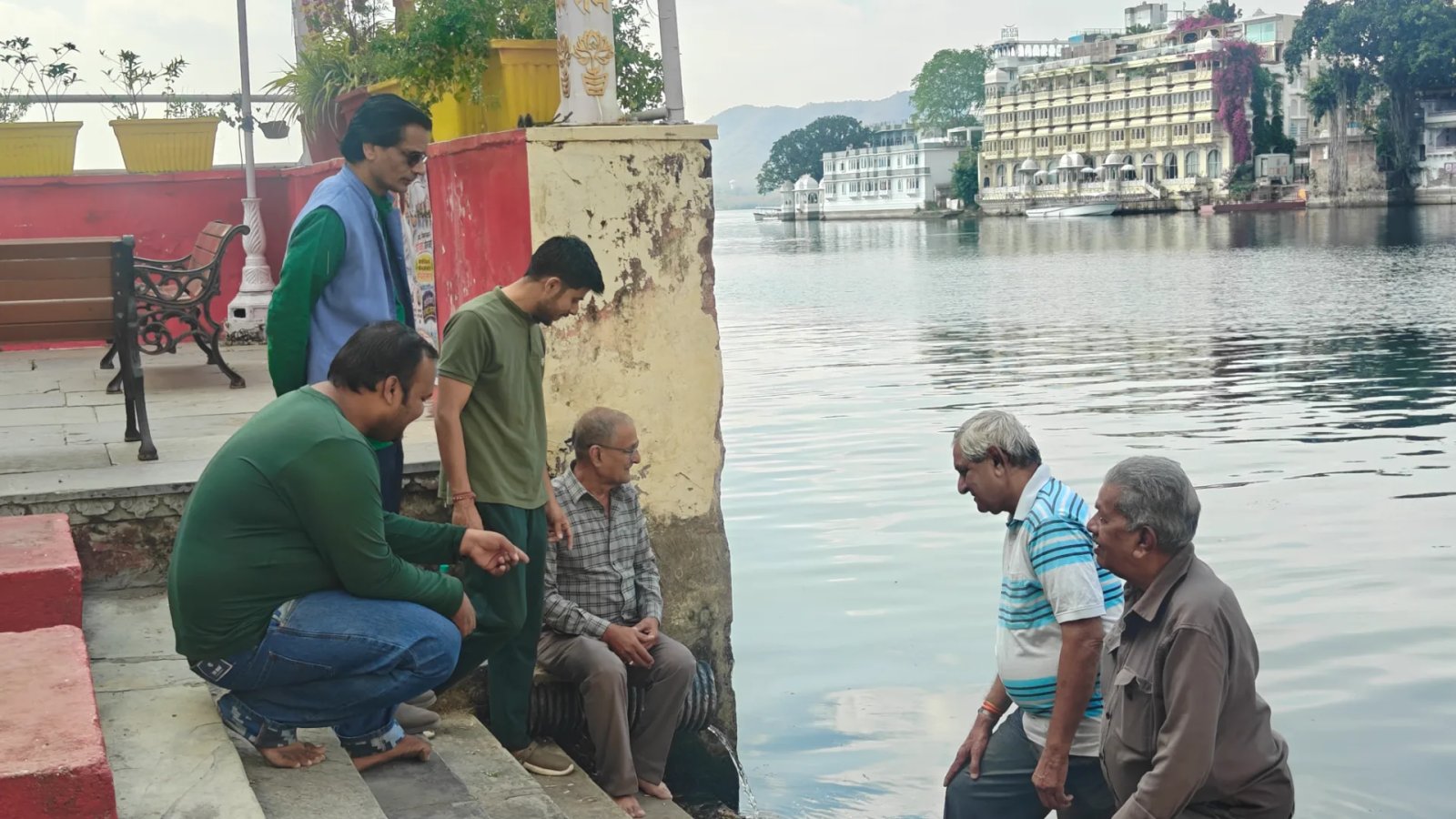
Udaipur: The discharge of contaminated water into Lake Pichola from Shri Ram Ghat has raised concerns among lake conservationists, particularly as the water level in the iconic lake, considered the lifeline of Udaipur, continues to decline. With water levels falling, the entry of polluted water poses additional risks to water quality and long-term drinking water security.
The issue was discussed during a Lake Dialogue organised at the Shri Ram Temple premises, where lake and river experts, environmentalists, academicians and social activists deliberated on water conservation, sewage management, pollution control and drinking water treatment systems.
Participants emphasised that addressing the water crisis requires not only increasing water availability but also protecting existing water resources from contamination.
Protecting Water Quality as Important as Conserving Water
Lake and river expert Dr. Anil Mehta said that a lake is not merely a reservoir but a living ecosystem. During periods of declining water levels, the continued inflow of pollutants can adversely affect water quality and aquatic life. He stressed the need to prevent untreated sewage discharge, identify pollution sources and conduct regular water quality assessments.
Referring to the principle of giving back to nature, Dr. Mehta said that lakes provide essential resources for human survival, but society must also fulfil its responsibility towards protecting them.
"Lake Pichola is not a filter into which we can continue dumping waste and sewage while expecting clean water in return," he observed.
He also called for the regular publication of data related to the lake's water level, water quality and pollution levels to keep citizens informed and encourage greater public participation in conservation efforts.
Integrated Management of the Entire Catchment Area Needed
Tej Shankar Paliwal, former member of the Lake Development Authority, said that conservation of Lake Pichola should not be restricted to cleaning and beautification of its ghats. He emphasised the need for coordinated management of the entire catchment area, drainage channels, sewage networks and water inlets connected to the lake.
He said that preventing untreated waste from entering the lake and ensuring regular monitoring of sewage treatment systems were essential to maintaining water quality.
Water Conservation is a Collective Responsibility
Social activist Nand Kishore Sharma stressed that conserving water must go hand in hand with preventing pollution. He said that conservation efforts would remain incomplete if available water resources were allowed to become contaminated. Citizens, commercial establishments and concerned government departments must collectively take responsibility for keeping lakes clean.
Pollution Prevention Must Precede Drinking Water Treatment
Academician Kushal Rawal said that drinking water treatment plants should not be considered the ultimate solution to pollution. Their effectiveness depends on the quality of raw water, the nature of pollutants, treatment technology and proper maintenance.
He emphasised the need to prevent sewage from entering the lake and ensure regular quality testing of both treatment plants and the supplied drinking water.
Every Drop Matters as Water Levels Decline
Young environmental enthusiast Vinod Kumawat pointed out that if the volume of water in a lake is reduced by half while the amount of a pollutant entering it remains unchanged, its concentration could approximately double under ideal mixing conditions.
However, he noted that actual conditions depend on the type of pollutant and the lake's environmental characteristics. He stressed that controlling pollution sources and conducting regular water quality assessments become even more important when water levels decline.
Call for Regular Monitoring and Timely Action
Senior citizen Dhrupad Singh said that inspections and official directions alone were not sufficient. Regular monitoring of drainage channels, sewage pipelines and water inlets connected to the lake, along with timely action against sources of pollution, was essential.
He added that making water quality reports publicly available would strengthen administrative accountability and help citizens assess the effectiveness of conservation measures.
Every Drop of Lake Pichola is Linked to Udaipur's Future
The Lake Dialogue concluded with a collective emphasis on protecting both the quantity and quality of water in Lake Pichola. Participants highlighted that climate change, irregular rainfall, rising water demand and pollution pressures make water conservation, scientific monitoring and effective sewage management increasingly important.
They called for an investigation into possible points of contaminated water entry, including Shri Ram Ghat, identification of pollution sources and time-bound measures to prevent further contamination.
Participants stressed that every drop of Lake Pichola is connected to Udaipur's water security, natural heritage and the future of coming generations. Protecting the purity of the city's lakes is as important as preserving their scenic beauty and remains a shared responsibility.