
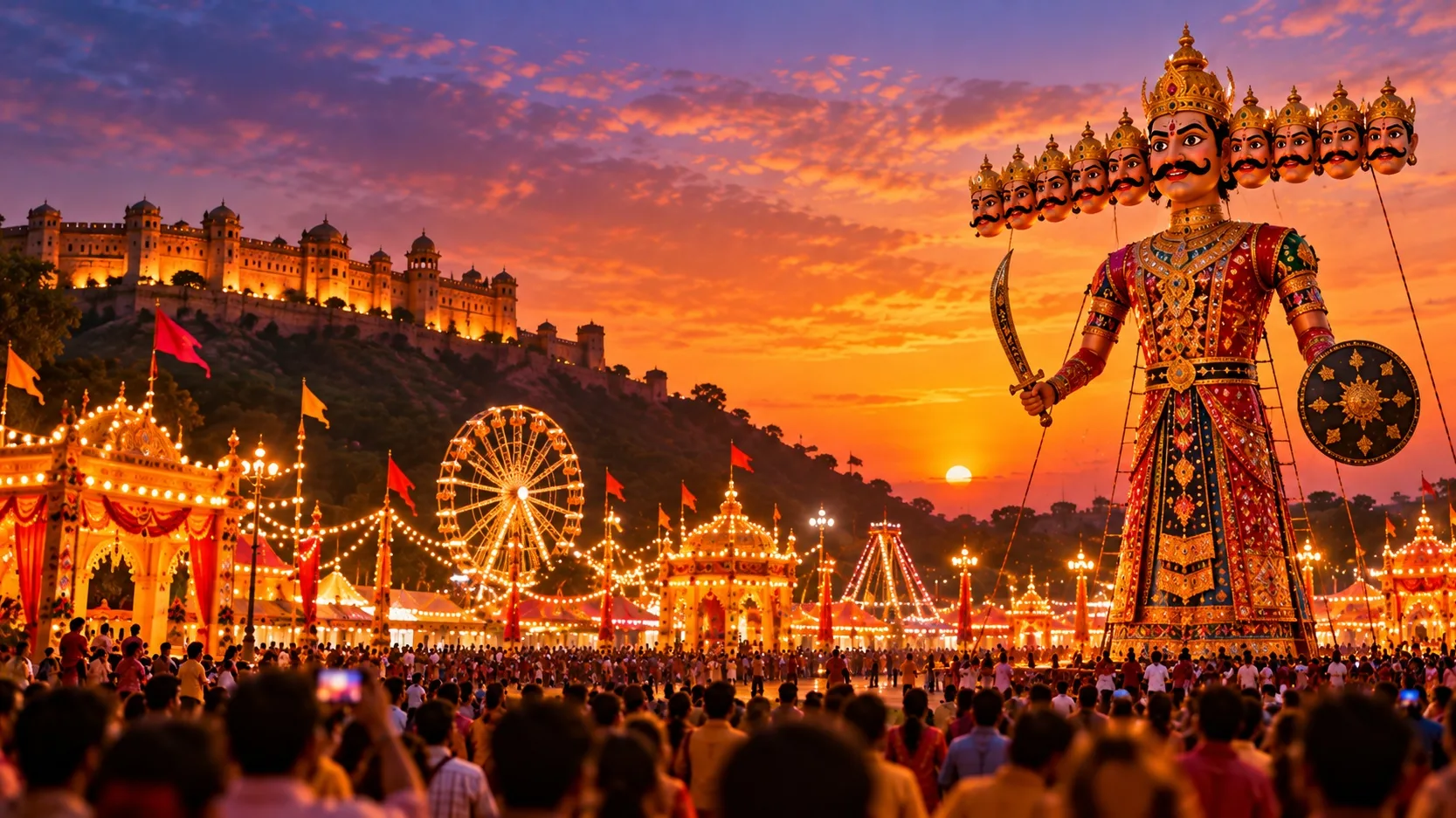
One of the greatest strengths of Indian culture is that it has never confined festivals to joy, celebration and merriment alone. Instead, it has transformed them into occasions for introspection, spiritual discipline, the cultivation of values and meaningful change in life. Every festival in India carries within it a timeless message. Dussehra, also known as Vijayadashami, is one such inspiring festival, deeply rooted in the rich heritage, spiritual traditions and philosophical wisdom of Indian civilisation. It guides humanity towards truth, courage, righteousness and self-conquest. The festival reminds us that the true victory of life does not lie in defeating others, but in overcoming our own weaknesses, inner conflicts and negative tendencies. The triumph of truth over falsehood, light over darkness, hope over despair and righteousness over evil has, for centuries, infused the Indian collective consciousness with renewed energy, faith and determination.
The most compelling cultural foundation of Dussehra is Lord Shri Rama’s victory over Ravana. This episode from the Ramayana is not merely the conclusion of a mythological or historical battle; it is an enduring narrative of the conflict between human virtues and the destructive force of ego. Shri Rama embodies righteousness, compassion, truth, duty and adherence to moral principles. Ravana, despite possessing immense knowledge, extraordinary strength and magnificent wealth, becomes a symbol of arrogance, unrestrained desires and unethical conduct. His life reveals a profound truth: knowledge divorced from wisdom, power unchecked by restraint and prosperity detached from morality ultimately become instruments of human downfall. The victory of Shri Rama is significant because he remained steadfast in his ideals even in the face of formidable adversities. Dussehra teaches us that however difficult circumstances may be, those who remain committed to truth and righteousness eventually become a source of faith for society and an enduring inspiration for generations to come.
In Indian culture, Dussehra is associated not only with Lord Rama’s victory over Ravana but also with Goddess Durga’s triumph over Mahishasura. The worship of divine feminine power during the nine days of Navratri, culminating in the celebration of Vijayadashami on the tenth day, symbolises the truth that sustained spiritual discipline paves the way for accomplishment, struggle leads towards success, and the awakening of inner strength prepares the ground for victory. The worship of Goddess Durga teaches us that confronting life’s challenges requires a harmonious combination of strength and sensitivity, courage and wisdom, and valour and compassion. In the Indian spiritual tradition, power does not merely signify physical might or dominance over others. It also encompasses inner strength, determination, patience, self-restraint and the moral courage to stand against injustice. Dussehra is, therefore, not only a celebration of the worship of power but also a reminder of the responsibility to use that power wisely and for the greater good.
The spiritual significance of Dussehra is profound. The burning of the external effigy of Ravana becomes meaningful only when we summon the courage to recognise and conquer the Ravana within ourselves. Lust, anger, greed, attachment, pride, envy, arrogance, laziness, violence and dishonesty are among the tendencies that weaken human character from within. The ten heads of Ravana can also be interpreted as symbolic representations of ten such inner evils. Every year, effigies of Ravana are set ablaze, fireworks illuminate the sky and celebrations come to an end. Yet, if jealousy, deceit, selfishness, hostility and ego continue to thrive within us, the true purpose of Vijayadashami remains unfulfilled. A meaningful Dussehra is one in which we overcome the resentment we harbour against others, eliminate deceit from our conduct, recognise our duties alongside our rights, and acknowledge the contributions of others to our own success. Self-conquest is the foundation of every true victory.
Indian culture connects celebration with spiritual discipline and spiritual discipline with the pursuit of excellence in life. Vijayadashami is a living expression of this timeless tradition. On this day, weapons and instruments of work are worshipped, new ventures are inaugurated, and people move forward with prayers for success and a renewed determination to achieve their goals. The true significance of weapon worship extends beyond the ritual reverence of arms; it signifies respect for power and a commitment to exercising it responsibly. In the contemporary world, our most effective weapons are knowledge, wisdom, education, science, hard work, ethical conduct and integrity. When these strengths are directed towards the welfare of humanity, they become powerful instruments of nation-building. Dussehra inspires us to move from inertia to purposeful action, from despair to hope, and from passivity to creativity. It offers an opportunity to fulfil unfinished commitments, explore new possibilities and resolve to give our lives a more meaningful and constructive direction.
Another important dimension of Dussehra is its connection with nature, agriculture and rural life. In Indian society, the festival has long been associated with harvest traditions, prosperity, seasonal transitions and collective celebration. The worship of the Shami tree, the exchange of its leaves as tokens of goodwill and the commencement of new ventures express reverence for nature and the desire for prosperity and well-being. In an agrarian country like India, a bountiful harvest is not merely an economic achievement; it is also a celebration of the interdependence of the earth, farmers and the natural world. These traditions remind us that human progress cannot be sustained by severing our relationship with nature. A civilisation that perceives sacredness in trees, rivers, mountains and the earth itself naturally carry within its festivals the values of environmental protection and harmonious coexistence. At a time when environmental degradation has emerged as a serious challenge to humanity, Dussehra provides an opportunity to rediscover our responsibility towards the natural world and renew our commitment to protecting it.
Vijayadashami is also a celebration of the inclusive and integrative spirit of Indian civilisation. Across the country, the festival is observed in diverse ways. In some regions, it is marked by Ramlila performances and the burning of Ravana’s effigies; elsewhere, it follows the grand celebrations of Durga Puja and the ceremonial farewell to Goddess Durga. In many places, people worship weapons, while others express the joy of victory through their distinctive folk traditions. Beneath this diversity lies a common cultural thread: faith in truth, devotion to righteousness, respect for strength and the aspiration for peace and prosperity. The need to translate the message of Dussehra into our social and national life has become more urgent than ever. Corruption, violence, social hostility, unethical competition, deceitful conduct and self-serving politics undermine the moral strength of society. Such evils cannot be eradicated through speeches, slogans or symbolic celebrations alone. They require the strengthening of individual character, social responsibility and institutional integrity. If we embrace honesty in our professional lives, remain conscientious in public life, infuse education and healthcare with human sensitivity, and promote mutual respect, love and harmony in society, we will be practising the true spirit of Dussehra. A nation’s strength lies not merely in its economic prosperity, military capabilities or technological achievements, but equally in the character, integrity, discipline and mutual trust of its citizens.
Ultimately, Dussehra is a festival of inner awakening rather than external triumph alone. It inspires us to kindle the light within, discover hope amid despair, preserve courage in the face of adversity and direct our lives towards renewal and constructive creation. On this Vijayadashami, let us resolve not to limit ourselves to burning the effigy of Ravana, but to eradicate the Ravana within us by overcoming ego, selfishness, falsehood and our own inherent weaknesses. Let us make truth our foundation, wisdom our guide, compassion our nature and purposeful action our spiritual discipline. This is how we honour the spiritual legacy of Indian culture; this is what gives meaning to celebration; and this is the victory that can illuminate individual lives while awakening a new consciousness in families, society and the nation. For the true spirit of Dussehra is fulfilled only when Ravana is vanquished not merely on the battlefield of public celebration, but also within the battlefield of the human mind; when the triumph of good is reflected not merely in fireworks, but in our conduct; and when the light of the festival shines not only in lamps, but also in our thoughts, values and actions.