
— Lalit Gargg —
The 81st session of the United Nations General Assembly once again witnessed the familiar questions between India and Pakistan—questions whose resolution remains critically important for peace and stability in South Asia. According to the United Nations, the 81st session commenced on September 8, 2026, while the General Debate was held from September 22 to 26. The central theme of this year’s debate was “Building Trust, Managing Change and Delivering an Effective United Nations for All.” At a time when the world is grappling with wars, terrorism, economic inequality, energy crises and geopolitical tensions, the question becomes even more significant: When will South Asia break free from the cycle of old disputes?
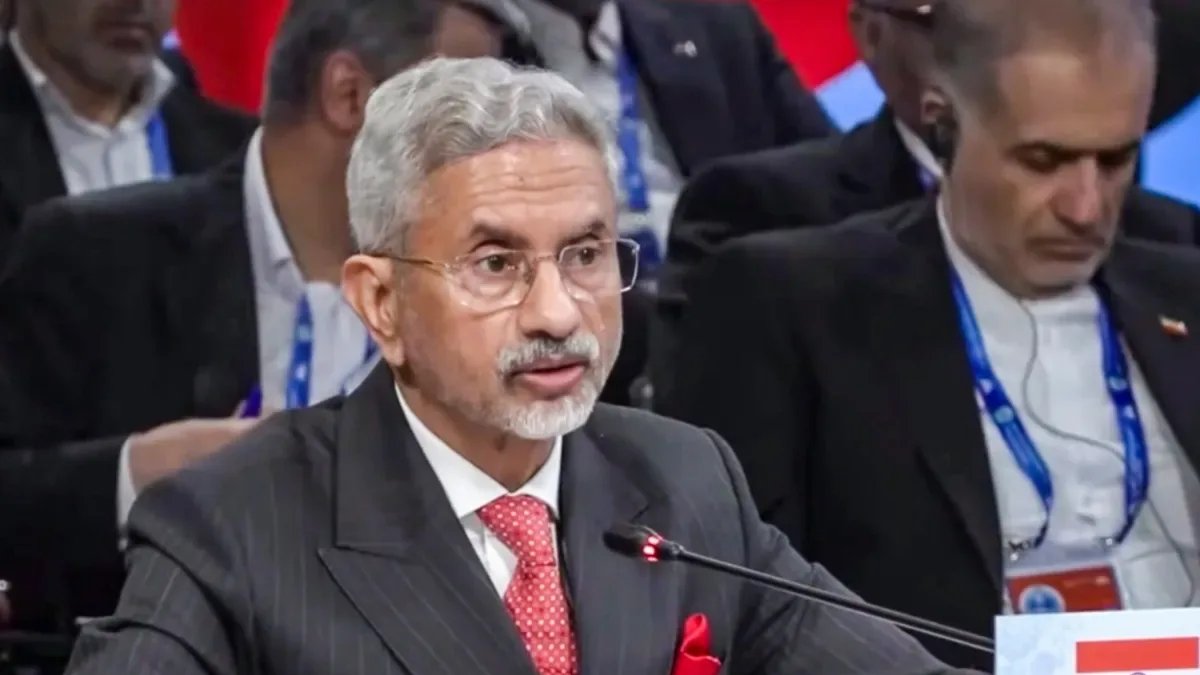
In his address to the General Assembly on September 26, India’s External Affairs Minister S. Jaishankar delivered a pointed and forceful statement. Without naming Pakistan, he referred to a “serial practitioner of terrorism” who, a day earlier, had misrepresented facts and attempted to normalise terrorism and evade its consequences. He made it clear that this could not be accepted. He also asserted India’s right to exercise self-defence against terrorism and stressed that governments sponsoring terrorism must be held accountable. He further underlined the need to expose and act against the financial sources that sustain terrorism. A day earlier, Pakistan’s Prime Minister Shehbaz Sharif had raised the Kashmir issue in his address and criticised India’s decision concerning the Indus Waters Treaty. Pakistan presented its position from its own perspective on the international stage, while India continued to raise questions regarding Pakistan’s alleged support for cross-border terrorism. Pakistan’s representative also levelled serious allegations against India concerning terrorism and Kashmir. Thus, the UN platform once again became a stage for mutual accusations between the two countries. But the real question is: After all these accusations, how much progress has actually been made towards a solution?
The foremost question before Pakistan concerns its policy towards terrorism. India has consistently alleged that terrorist networks operating from Pakistani territory or with its support pose a serious security challenge to India. Jaishankar made this point in clear terms, stressing that terrorism and friendship cannot go hand in hand and that those responsible for terrorism must change their course.
Pakistan, on the other hand, has also accused India of supporting terrorism and has held India responsible for violent incidents within Pakistan. The truth and evidence relating to individual allegations may require investigation and verification in specific cases. Yet one broader reality remains undeniable: terrorism has exacted a devastating human, economic and social cost from the people of both countries. Pakistan itself has been grappling with terrorist violence for decades. The question, therefore, is: How long will Pakistan continue to view terrorism primarily through the lens of strategic policy rather than recognising the threat it poses to its own national security and future?
Terrorism cannot become the permanent instrument of a nation’s foreign policy. When terrorism is employed as a strategic tool, it can eventually turn into a threat to the very country that seeks to use it—damaging its internal security, economy and international credibility. Pakistan itself has suffered immensely from terrorist violence. It therefore has a historic opportunity to approach the issue of terrorism not merely from an India-centric perspective, but also in the context of its own national security and the future of its people. Combating terrorism is not simply about fulfilling another country’s demand; it is fundamentally about protecting Pakistan’s own citizens. The second major question concerns Kashmir. Pakistan once again raised the Kashmir issue at the UN General Assembly. Yet nearly eight decades of such debates have demonstrated that merely raising the issue on international platforms does not resolve the problem. The Kashmir dispute has deepened mistrust between India and Pakistan, generated security tensions and diverted attention from development priorities in both countries. If Pakistan genuinely seeks peace and stability in the region, it needs to seriously consider what it is achieving for the future of its own citizens by keeping Kashmir at the permanent centre of its foreign policy. Repeatedly raising Kashmir at international forums while leaving pressing domestic challenges in the background cannot provide a sustainable long-term solution for any country.
The third—and perhaps the most serious—question concerns Pakistan’s economy and the everyday life of its citizens. Inflation, employment, energy, education, healthcare and social security are fundamental responsibilities of any government. Foreign policy becomes meaningful only when its ultimate objective is to make the lives of a nation’s citizens safer, more prosperous and more dignified. For Pakistan, this is the time to seriously reflect on whether greater energy should be devoted to political and diplomatic campaigns against India on international platforms, or to the economic needs of its people, institutional stability and human development. It is equally important that India-Pakistan relations not be viewed solely through the prism of mutual accusations. India’s security concerns are genuine, and the foremost responsibility of any government is to protect its citizens. Jaishankar also emphasised India’s right to self-defence and its commitment to a policy of zero tolerance towards terrorism at the United Nations.
At the same time, however, lasting regional peace requires a balance between firmness against terrorism and keeping avenues for dialogue open. Dialogue can be meaningful only when there is clarity and sincerity on the question of violence and terrorism. Pakistan must also understand that the world today does not merely listen to statements; it closely observes policies, actions and conduct. The fundamental purpose of the United Nations General Assembly is to provide a platform for multilateral dialogue, peace and cooperation. If that platform is repeatedly used merely to level accusations against one another, the question naturally arises: What do the people of India and Pakistan actually gain from it?
India and Pakistan are both nuclear-armed neighbours. Therefore, tensions between them cannot remain merely a bilateral issue. Their consequences can extend to the security of the entire South Asian region and, potentially, to global stability. The most important question before Pakistan today is one of introspection: Does it want to build its future on the foundations of old disputes, Kashmir-centric politics and allegations surrounding terrorism—or on economic development, education, employment, institutional strength and regional cooperation? India, too, faces the challenge of keeping the possibilities of lasting peace in South Asia open without compromising national security. The answer to when Pakistan will change cannot be provided by another country. Ultimately, change depends upon Pakistan’s own political will, institutional decisions and policy choices. But the direction is clear: terrorism must not be allowed to become a political instrument in any form; the economic needs of the people must receive priority; confrontation centred perpetually around Kashmir must give way to a broader vision of the future; and relations with neighbouring countries must evolve on the foundations of trust, mutual respect and peaceful cooperation rather than violence.
If Pakistan chooses this path, the benefits will not accrue to India alone. They will extend to the people of Pakistan and to the entire South Asian region. But if it continues along the old path, the most difficult question will ultimately be posed not by the world, but by its own citizens: How long will the politics of the past be allowed to determine the present—and the future—of coming generations?