
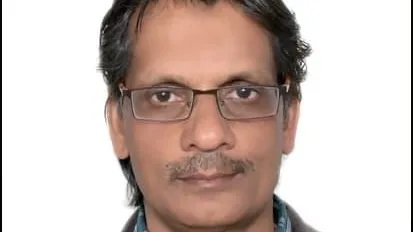
Udaipur, Dr Anil Mehta, Principal of Vidya Bhawan Polytechnic, Udaipur, and a noted environmentalist, left for Antalya, Turkey, on Saturday to participate in the 31st United Nations Climate Change Conference (COP31). He will attend the global conference until November 20.
Dr Mehta is the Joint Secretary of Global Water Partnership (GWP India) and a member of the Expert Appraisal Committee (Industry-2) of the Ministry of Environment, Forest and Climate Change, Government of India.
He is also among the key members of the ‘Harit Bharat’ team of Paryavaran Sanrakshan Gatividhi (PSG). On the recommendation of the Government of India, the United Nations Framework Convention on Climate Change (UNFCCC) has granted him a Party Overflow Badge to participate in the conference.
As part of a 30-member Indian delegation, the Harit Bharat team will seek to bring Indian environmental values, indigenous traditions and a nature-centric lifestyle based on coexistence into the global climate discourse.
The team aims to highlight that addressing climate change requires more than technological innovation, renewable energy and financial resources. It also calls for fundamental changes in human attitudes, behaviour, production patterns and consumption habits.
In this context, the concept of HARIT (Holistic Action for Revitalisation of Indigenous Traditions) assumes significance. It seeks to revive the values embedded in India's traditional knowledge systems, including reverence for nature, moderation, responsible resource utilisation, service and coexistence. Its central message is to take from nature only what is necessary and use natural resources responsibly, keeping the interests of future generations and all living beings in mind.
COP31, being held in Antalya from November 9 to 20, aims to translate climate commitments under the Paris Agreement into effective action and accelerate global climate initiatives. Key areas of discussion include the transition to clean energy, zero waste and the circular economy, climate-resilient cities, food and water security, climate finance, biodiversity conservation, restoration of marine and terrestrial ecosystems, and youth participation.
According to Dr Mehta, these priorities need to be viewed through the Indian concept of ‘Harit’. Development should not be measured solely in terms of economic growth but also through ecological growth. Similarly, alongside the circular economy, greater emphasis must be placed on circular ecology, which focuses on restoring natural resource cycles and maintaining ecological balance.
He noted that Indian philosophy regards the Earth not merely as a planet or resource but as a mother, reflected in the ancient Sanskrit expression, ‘Mata Bhumih Putroham Prithivyaah’ (The Earth is my mother, and I am her child). The balance of the five elements — earth, water, fire, air and space — is considered fundamental to maintaining harmony in nature. Integrating this nature-centric philosophy into global policies and everyday life is essential to addressing climate change.
Dr Mehta believes that the COP31 discourse should extend beyond climate adaptation and emission reduction to embrace the idea of ‘Climate Peace’ — establishing balance and harmony between humanity and nature. Protecting water resources, forests, lakes, biodiversity and local ecosystems must become an integral part of global climate action.
He emphasised that reviving India's traditional values of responsible consumption, service to nature, community participation and environmentally conscious living is now a global necessity. Through its participation at COP31, the Harit Bharat team will seek to present this message to the international climate community.