
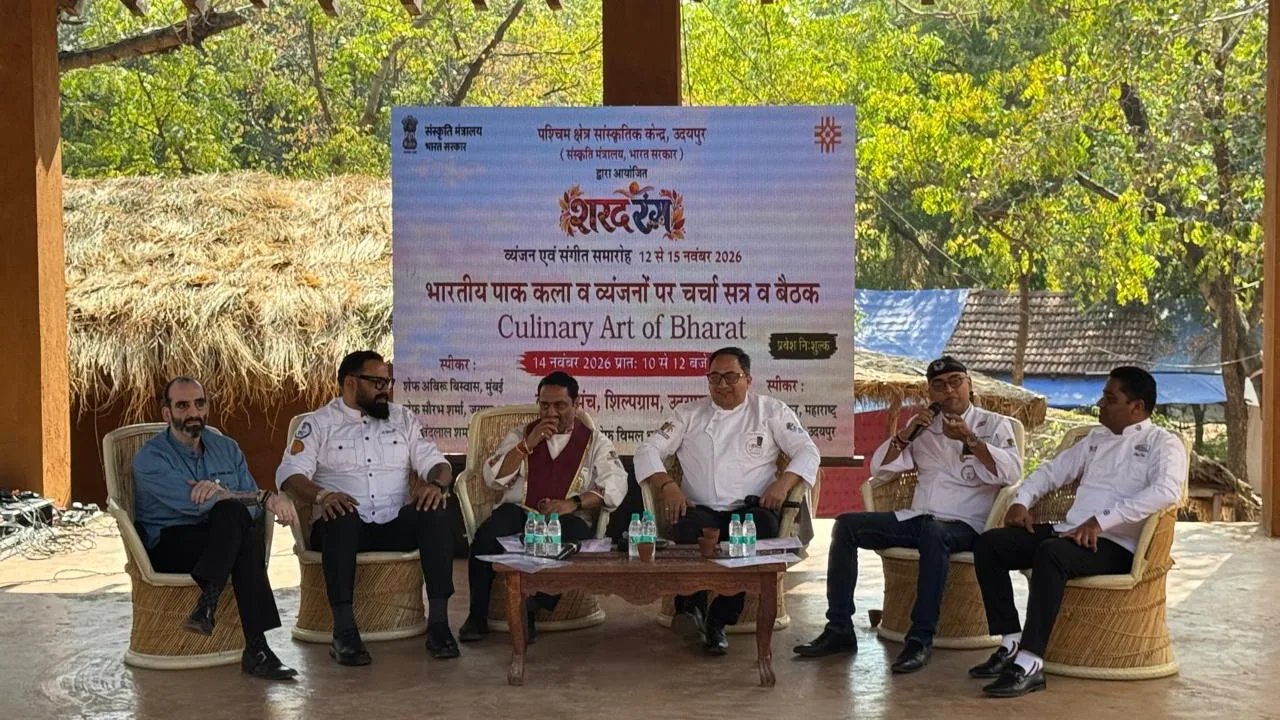
Udaipur: In Indian kitchens, it is not just lentils, bread and spices that simmer over the flame. They also preserve generations of memories, stories of geographical challenges, traces of migration and the emotions of everyday community life.
This fascinating perspective on India's culinary heritage came alive during a panel discussion featuring renowned chefs on the second morning of the ‘Sharad Rang’ festival at Shilpgram, Hawala village.
The culinary experts highlighted that India's food traditions are much more than a collection of recipes. Every regional platter represents a living history shaped by geography, climate, natural resources, migration and social customs.
From Rajasthan's desert landscapes to the Aravalli ranges, Mewar, Hadoti and border regions, local climatic conditions and available resources have played a significant role in shaping distinct culinary identities. Whether it is food prepared to remain fresh for longer periods with minimal water or nutritious recipes made from indigenous grains, every traditional dish tells a story of adaptation, resilience and harmony with nature.
The discussion also challenged conventional perceptions of Bengali cuisine, which is often associated primarily with fish and sweets. Speakers highlighted the diversity of Bengali food traditions, while also drawing attention to Punjab's rich vegetarian culinary heritage, traditional household recipes and the strong sense of community reflected in its food culture.
Discussing Maharashtra's culinary traditions, the experts explored how historical circumstances, wartime experiences, migration and changing social conditions influenced the evolution of regional flavours.
The traditional community dining practice of Himachal Pradesh, particularly the celebrated ‘Dham’, brought another important dimension to the discussion. The speakers described its carefully prepared dishes, organised serving traditions and the warmth of people dining together as a reflection of India's shared cultural values and social bonds.
The panel also deliberated on the cultural evolution of vegetarianism in India and the importance of preserving traditional Indian dishes with their original names, identities and culinary significance.
Expressing concern over the gradual disappearance of traditional recipes, the experts observed that changing lifestyles and declining family interactions have weakened the transmission of culinary knowledge across generations.
They emphasised the need to identify, document and preserve traditional recipes, introduce younger generations to regional food heritage and explore recognition mechanisms such as Geographical Indication (GI) tags for distinctive regional food products.
The discussion featured culinary insights and experiences from Chef Abiru Biswas of Mumbai, Saurabh Sharma of Jaipur, Nandlal Sharma of Himachal Pradesh and Dev Kasakar of Maharashtra. The session was moderated by Chef Vimal Dhar.
The engaging interaction highlighted how India's culinary diversity represents its historical experiences, regional identities and collective cultural memory.
The central message was clear: preserving traditional food is not merely about saving recipes; it is about protecting the stories, identities and cultural heritage of generations.